

Awaab’s Law Is Changing Social Housing: What Tenants Need to Know About Damp, Mould and Housing Disrepair Claims in 2026
or call Legal HD on 0800 031 5709
Awaab’s Law Is Changing Social Housing: What Tenants Need to Know About Damp, Mould and Housing Disrepair Claims in 2026
or call Legal HD on 0800 031 5709
Damp and mould is one of the most common causes of housing disrepair in social housing settings, and in December 2020 it had fatal consequences which have led to a major legislative change in social landlords’ responsibilities and how housing disrepair cases need to be managed. This works to the advantage of social housing tenants and therefore it is important that you understand the new laws and what they mean for you.
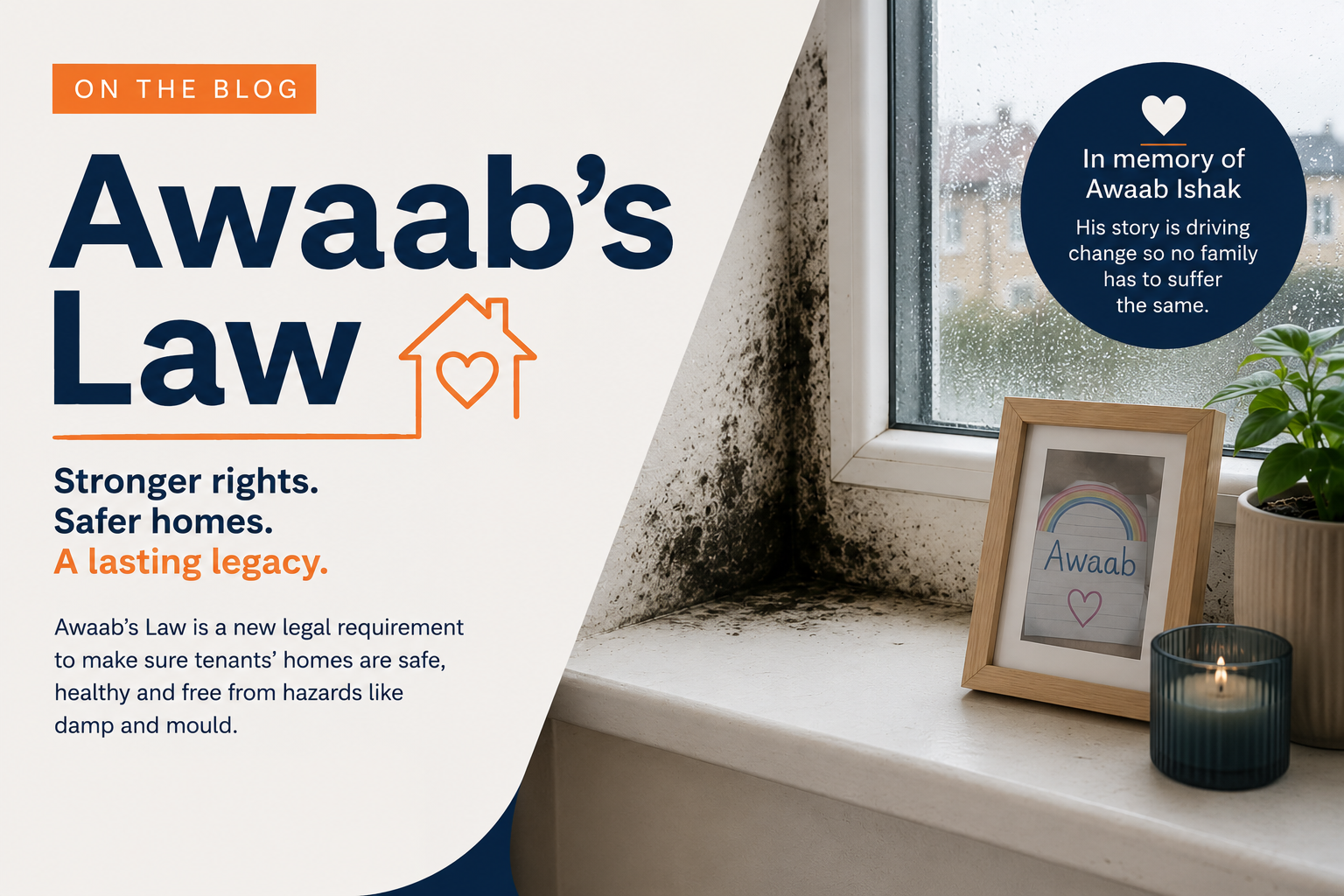
Awaab Ishak was a two-year-old boy who lived with his parents in a one-bedroom flat in Rochdale, Greater Manchester. The flat developed damp and mould which was reported to Rochdale Boroughwide Housing, the landlord of the property. The issue was never properly addressed and prolonged exposure to the damp and mould led to Awaab losing his life. The 2022 inquest into his death found the death was preventable and called for legislative change in housing laws. The result in October 2025 was the introduction of Awaab’s Law, which aimed to place new responsibilities on social housing landlords to prevent this type of death, or any kind of illness or discomfort, from happening again.
What is Awaab’s Law?
The Social Housing (Regulation) Act 2023 is the legal framework through which Awaab’s Law is being enforced. These new regulations require social housing landlords to stick to strict timeframes in dealing with damp and mould issues in social housing. The scope of the regulations will include other common housing disrepair issues when they are introduced into legislation later in 2026 and 2027, but for now, the regulations specifically deal with damp and mould only.
In simple terms, the aim of Awaab’s Law is to prevent families suffering prolonged exposure to damp and mould, and therefore facing the risk of serious health impacts. The regulations apply to local authority properties, social housing properties and properties provided by housing associations, and the main focus is on categorising a damp and mould hazard and then placing this within a new timeframe in which the landlord has to act.
What are the new changes introduced by Awaab’s Law?
From October 2025, landlords need to categorise a damp and mould hazard as either:
- Emergency – An emergency hazard is one that poses an immediate risk to a tenant’s health. This must be made safe within 24 hours.
- Non-emergency – This is a hazard which doesn’t pose an immediate risk to a tenant’s health, but the landlord must investigate this type of issue within 10 working days of it being reported to them. The landlord must provide a written report of this inspection to the tenant within three working days of the inspection, and upon completing this investigation, the landlord must commence repairs within an additional five working days if a significant hazard is found.
The aim of these restrictions is to prevent a situation where the landlord simply ignores a report of damp and mould. In addition to these reactive timeframes, a landlord is also now required to periodically inspect all their properties to identify any signs of damp and mould. This is so they can act quickly to prevent any serious issues developing.
All repair work required as a result of a non-emergency hazard must be completed within a reasonable time period. The landlord must communicate this timeframe with the tenant and must explain in writing if they cannot meet this timeframe. If this is the case, the landlord must also provide suitable alternative accommodation for the tenant(s) if the property cannot be made safe.
What does this mean for tenants?
The introduction of Awaab’s Law now offers social housing tenants much more protection against damp and mould issues, and specifically any inaction from a landlord. Under these regulations, tenants should report any issues with:
- Damp, mould and fungal growth
- Excess cold from broken heating systems, broken doors or windows or poor insulation
- Structural collapse including roofs, walls and ceilings
- Doors and windows which can’t open to create ventilation
- Faulty ventilation systems
All these issues can be categorised as potentially contributing to damp and mould, and therefore will trigger the timeframe put in place by Awaab’s Law as soon as you report them to your landlord. Under these new regulations, landlords face enforcement action, fines and potentially even more severe penalties if they fail to act within this timeframe and therefore breach the regulations. However, this also strengthens the tenant’s case when it comes to making a housing disrepair claim. Breaching the regulations is clear evidence that a landlord has failed in their duties. So a tenant should contact a housing disrepair claim specialist if this is the case. They can help in starting the claims process, but can also help in resolving the disrepair issue and/or finding suitable alternative accommodation in the meantime.
Making a housing disrepair claim under Awaab’s Law
The main benefit of Awaab’s Law for social housing tenants, is that the new regulations specify a timeframe within which a landlord must act to resolve a damp and mould issue. Previously the tenant had to give the landlord a ‘reasonable’ time period, which was vague and sometimes difficult to provide evidence of. Under Awaab’s Law you know that a landlord has no more than 10 days to investigate a reported issue, and then no more than five days to start the necessary repairs. Anything outside of this timeframe is breaching the regulations and you should have clear evidence – documents or records of communications – to prove this.
At Legal HD we believe Awaab’s Law is empowering social housing tenants to come forward with housing disrepair issues which need resolving, and is proving successful in providing them with more protection, and more power to get housing disrepair issues fixed. So we are encouraging social housing tenants to:
- Report problems contributing to damp and mould straight away
- Maintain a record of communications with your landlord
- Keep evidence of the problem with photos and records of health impacts
- Contact Legal HD as a housing disrepair claim specialist if the landlord doesn’t resolve the issue within this clear timeframe.