

Black Mould Keeps Coming Back in My Flat – Why Cleaning It Isn’t Enough
or call Legal HD on 0800 031 5709
Black Mould Keeps Coming Back in My Flat – Why Cleaning It Isn’t Enough
or call Legal HD on 0800 031 5709
Black mould is one of the most common disrepair issues in rental properties. It can cause considerable health issues as well as being unpleasant and uncomfortable to live with. Black mould can be treated with specialist care and attention but it is important that this is done correctly, because it will often return if not treated properly. And certainly, if you leave black mould and don’t report it to your landlord it can start to have considerable effects, on both your health and on the structural integrity of the property.
What is black mould?
Moisture can be generated in many ways in a property, but usually occurs due to a lack of suitable ventilation. Black mould is a bacterial growth that is caused by moisture in a property and therefore it is most common in areas such as kitchens, bathrooms and bedrooms because these rooms often have poor ventilation compared to the amount of moisture generated, from steam, washing and body heat causing condensation. We can also breathe out water vapour as we sleep, and black mould is formed when water vapour comes into contact with cold surfaces, such as walls, ceilings and windows. Black mould can also be formed where there is a steady water source, such as a slow water leak.
We usually first detect a black mould problem in the form of condensation, and if this is not cleaned or dried after a few weeks it will form black mould. Black mould generates faster in areas where there is low air movement because the water doesn’t evaporate, this often means it can be undetected in areas such as behind wardrobes and beds or high up in ceiling voids.
The problem with black mould in a property
The presence of black mould spores in a property can lead to health issues such as respiratory illness and symptoms of coughing, sneezing and breathing difficulties, as well as eye and skin irritation. Living with the issue can also lead to depression and mental health problems. In terms of the structure of a property, if left, black mould can start to weaken the plaster on your walls and ceilings, as well as timber door and window frames. These structures can then degrade and cause safety problems and major structural issues in the home.
How to remove black mould from your home
Unfortunately, removing black mould is not as simple as cleaning it. Black mould often returns after people clean it because:
- They have not cleaned it properly
- The moisture that caused the mould is still present and ventilation hasn’t been improved
- Attempting to clean the mould has released airborne spores and these help the mould to regrow
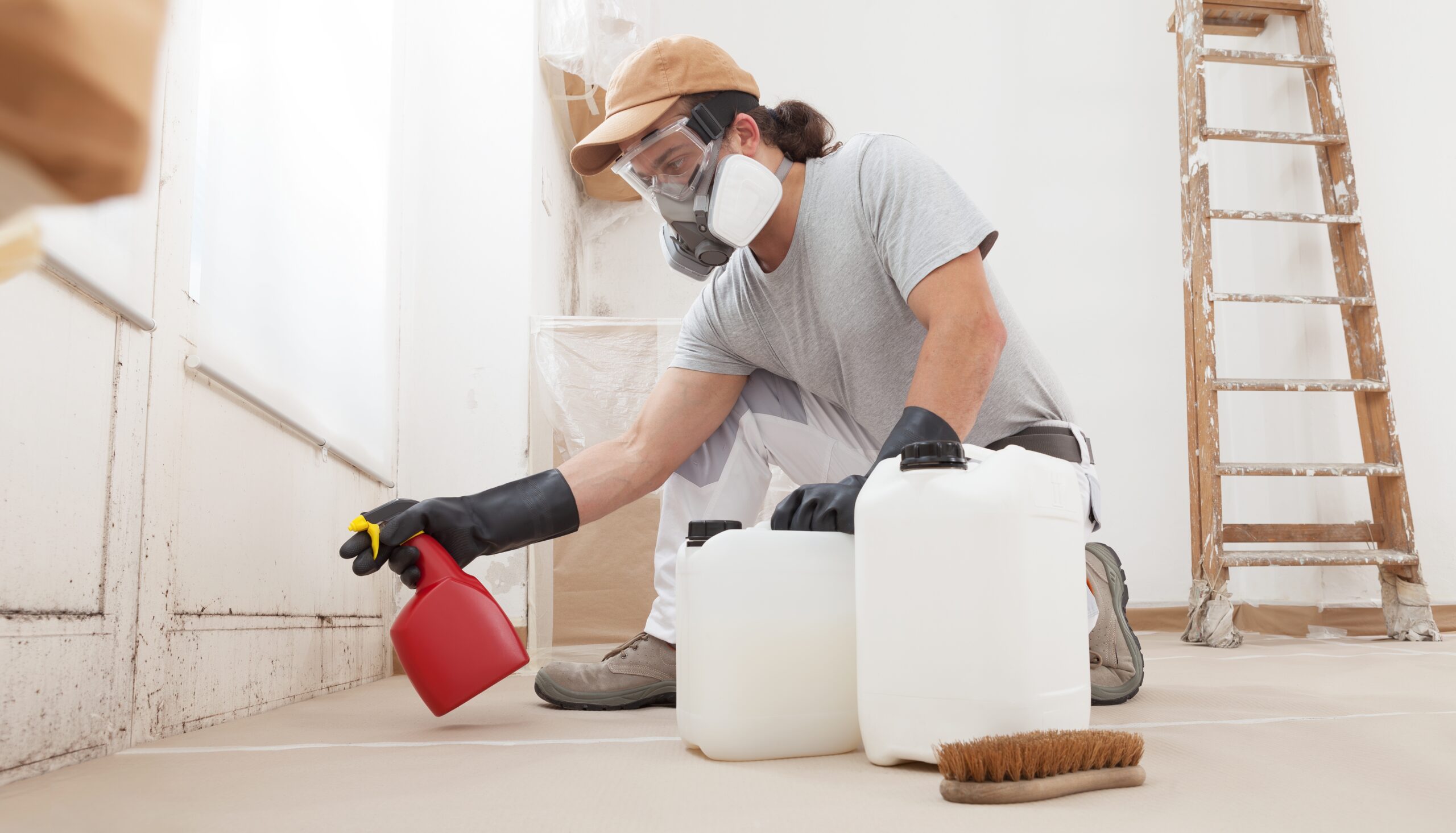
Removing black mould requires specialist cleaning. You have to break down the spores and kill them with specialist materials, otherwise they will just return. Also, rubbing the spores with a cloth before any treatment is made will simply release all the spores and make them airborne. If you attempt to clean black mould yourself you should also use personal protective equipment because the spores can irritate the eyes and skin when disturbed and released, and can also enter your respiratory system. Proper cleaning requires spraying the mould with a choice of material such as a specialist bleach-based cleaning chemical, white vinegar or tea tree oil. You then need to rinse and thoroughly dry the area.
Because this is a specialist cleaning task it is better to report the issue to your landlord and leave them to appoint a specialist cleaning company. This is the best way to remove the mould and also to do so in a way that is safe and doesn’t release airborne spores elsewhere in your property. Your landlord should also look into what has caused the mould, i.e. inadequate ventilation or a water leak somewhere within the property.
What to do if this doesn’t solve the problem
Dealing with black mould should be done by a specialist cleaning company appointed by your landlord. You should contact your landlord immediately to report the black mould before it becomes excessive. If the problem is not dealt with, or not dealt with properly and it reappears, the black mould can start to cause more serious problems. At this stage you can consider contacting specialist housing disrepair legal services such as Legal HD. We can provide specialist advice on how to deal with the situation and can help you address it by, first and foremost, ensuring your home is safe to live in. If you feel your landlord has not adequately dealt with the issue you may be able to make a claim for housing disrepair.
If this applies to you, contact our team at Legal HD today.